

Trading can turn uncertainty into opportunity with the right approach. This guide shares actionable trading strategies and expert insights. It helps you build confidence and make smarter decisions in today’s markets.
From mastering fundamentals to leveraging tools, you’ll explore how proven trading strategies adapt to market shifts. Each section highlights real-world applications. This ensures you gain practical knowledge to refine your methods.
Key Takeaways
- Learn core trading strategies to align with market trends.
- Understand how risk management strengthens trading decisions.
- Discover tools that simplify analyzing market data.
- Adopt a structured approach to improve consistency.
- Access expert advice to avoid common pitfalls.
Understanding the Trading Landscape
Trading isn’t just about today’s numbers. To grasp trading tips that work, knowing how markets evolved is key. This journey from ancient barter systems to today’s high-tech platforms shapes every strategy.
A Brief History of Trading
Early trading began with exchanging goods like grain and tools. The Amsterdam Stock Exchange in 1602 marked the first formal stock market. By the 1900s, futures markets expanded globally. Today, platforms like E*Trade and Interactive Brokers let traders access markets instantly.
- 1600s: First stock exchanges set trading rules
- 1970s: Futures markets grow with commodities trading
- 2000s: Digital tools make trading accessible worldwide
Current Market Dynamics
Modern markets move faster than ever. Algorithms now handle over 80% of stock trades, while cryptocurrencies like Bitcoin add new layers to strategies. Events like Fed rate decisions or geopolitical shifts ripple through markets in seconds.
- Global markets trade 24/7, with Asia, Europe, and U.S. markets overlapping
- AI tools predict trends using real-time data streams
- Post-2008 regulations protect investors but add layers of compliance
“The markets of 2023 demand constant learning. Staying informed is the first trading tip for newcomers.” – Ray Dalio, Bridgewater Associates
From history’s lessons to today’s tech-driven speed, understanding this landscape turns uncertainty into opportunity.
Key Principles of Successful Trading
Successful trading starts with mastering key principles. Market analysis is the first step. It gives direction to your decisions. Start by studying trends, pricing, and historical data to spot opportunities.
- Know your risk tolerance: Decide how much you can afford to lose per trade.
- Set clear goals: Define profit targets and exit points before entering the market.
- Stay informed: Follow news, economic reports, and market analysis reports.
| Principle | Why It Matters |
|---|---|
| Risk Management | Limits losses and protects capital. |
| Discipline | Avoids emotional decisions during market swings. |
| Continuous Learning | Adapts strategies as markets evolve. |
Timing is crucial when you have solid market analysis. Tools like price charts and volume data help find the best times to buy or sell. Always trade with a plan. Successful traders stick to their strategies, even when markets are unpredictable.
Market Trends and Analysis
Keeping up with market changes is crucial. Modern technical analysis tools make it easier to track patterns and predict trends. Let’s see how to use these tools well.
Identifying Emerging Trends
Here’s how to spot trends early:
- Watch price movements on daily and weekly charts for changes.
- Use moving averages to see long-term trends.
- Look for high trading volume, it shows strong trends.
Interpreting Data Effectively
Understanding data is key. Try these:
- Compare old and new data to find patterns.
- Set up alerts with tools like TradingView or MetaTrader.
- Use technical indicators (RSI, MACD) with price action for better understanding.
Using these methods with technical analysis tools turns data into useful information. Stay open to new ideas and adjust your plans as trends change.
Tools and Resources for Modern Trading
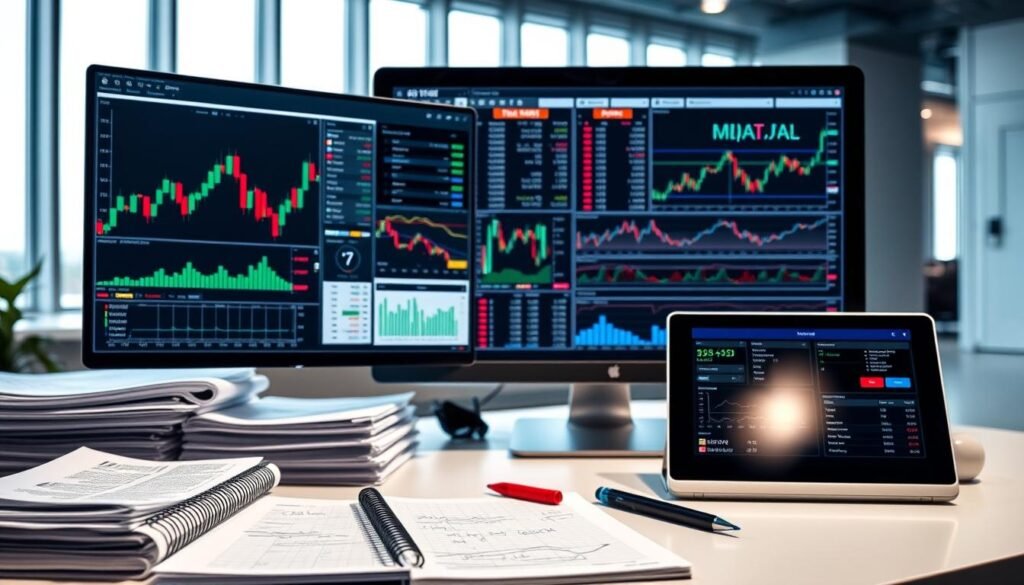
Modern traders use a blend of fundamental analysis tools and advanced platforms. Platforms like MetaTrader 5 and TradingView give real-time data and charts. For fundamental analysis, Bloomberg Terminal and Yahoo Finance offer reports and economic data.
- News platforms: Reuters and CNBC explain global and economic changes.
- Analysis software: Morningstar and Zacks Investment Research make financial statement reviews easier.
- Education hubs: Coursera courses from universities like Wharton teach about risk and market behavior.
“Data is the backbone of smart trading—without it, decisions are guesses.”
Mobile apps like Robinhood and E*TRADE make it easy to get market updates. Use these with fundamental analysis of trends and competitors. The SEC’s EDGAR database is a free resource for filings and earnings calls.
Keep up with podcasts like “Market Measures” or Fidelity webinars. Successful traders mix tech tools with old-school methods. This way, no data point is missed. The right tools turn data into smart trading moves.
Risk Management in Trading
Protecting your investments begins with smart risk management strategies. Every trade has some uncertainty. But, with careful planning, you can lower the risk of unexpected losses. Here’s how to create a safety net for your portfolio.
Identifying Potential Risks
It’s important to spot risks early. Common threats include:
- Market volatility causing sudden price drops
- Overexposure to single assets or sectors
- Emotional decisions driven by fear or greed
Mitigation and Contingency Strategies
| Strategy | How It Works | Example |
|---|---|---|
| Diversification | Spreads risk across asset classes | Invest in stocks, bonds, and commodities |
| Position Sizing | Adjust trade sizes based on account size | Never risk more than 2% per trade |
| Regular Reviews | Monthly portfolio audits | Trim underperforming holdings |
Stop Loss Techniques
Use these tools to automate protection:
- Stop Loss Orders: Pre-set exits at specific price levels
- Trailing Stops: Move upward as profits grow
- Mental Stops: Psychological limits to avoid panic selling
By combining these methods, you can build a strong defense against market unpredictability.
Developing a Winning Trading Strategy
A winning trading strategy is unique for each person. It must fit your goals, how much risk you can take, and the market’s conditions. First, decide what you want to achieve—are you looking for steady growth or fast profits? Then, look at past and current data to find patterns.
- Pick the right tools for your skills. Stocks, forex, or ETFs need different strategies.
- Set limits on how much you can lose. Never risk more than 1-2% of your capital per trade.
- Try out ideas with free tools like TradingView or MetaTrader. They help you see how well your strategy might do.
“A winning trading strategy combines discipline with adaptability. It’s not about guessing; it’s about preparing for every scenario.” – John Bollinger, Technical Analyst
Keep track of how well you’re doing with a simple table:
| Component | Description | Example |
|---|---|---|
| Risk Management | Controls exposure to loss | Stop-loss at 2% per trade |
| Entry/Exit Rules | Clear buy/sell triggers | RSI above 70 = sell signal |
| Adaptability | Adjustments for market shifts | Switch to defensive stocks during downturns |

Regularly check and update your strategy. Use real results to make changes every month. Remember, being consistent is more important than being overly complex. Start small, test your ideas, and improve little by little. Your strategy will evolve as the markets do.
Technical Analysis in Trading
Technical analysis helps traders guess price changes by looking at past data. It uses technical indicators and patterns to spot trends and possible changes. This method turns data into useful tips, helping traders make quicker choices.
Patterns like head-and-shoulders or ascending triangles show when buyers and sellers are active. For instance, a breakout from a symmetrical triangle might mean a big price jump. Traders mix these signs with technical indicators like moving averages or the Relative Strength Index (RSI) to check trends.
- Moving Averages (MA): Smooths price data to show trends, with crossovers hinting at buy/sell times.
- RSI: Finds overbought/oversold spots, warning of possible reversals.
- MACD: Mixes trend direction and speed, great for seeing trend strength.
- Bollinger Bands: Shows volatility; price hitting the upper band might mean it’s time to sell.
Getting good at these tools takes time. Many traders use platforms like TradingView or MetaTrader to add technical indicators to charts. Adding real-time news can make timing better and reduce uncertainty. Start with 1-2 indicators, track their signals, and change as you get more experience.
Fundamental Analysis for Better Trading Decisions
Fundamental analysis looks at economic indicators and company data to guess market trends. It helps traders find hidden chances and dodge risks. Start by looking at data that affects how investors act.
Economic Indicators and Their Impact
Watch these important economic indicators to catch trends early:
- GDP: Shows a country’s total economic output.
- Unemployment Rate: Tells if the job market is strong.
- Inflation Rate: Tracks price changes in goods and services.
| Indicator | Definition | Market Impact |
|---|---|---|
| GDP | Annual economic output | Rising GDP often boosts stock prices |
| Unemployment Rate | Jobless population percentage | Low rates may increase consumer spending |
| CPI | Consumer Price Index | Measures inflation affecting interest rates |
Evaluating Company Performance
Look at a company’s financial health through:
- Revenue growth trends
- Profit margins and debt levels
- Leadership quality and industry position
Use this data with economic indicators for a complete view of investment chances. Mixing both helps create a strategy that fits real-world situations.
Expert Insights into Trading Psychology
Mastering trading isn’t just about numbers—it’s about mindset. Trading psychology insights show how emotions and habits shape results. Even experienced traders face fear, greed, or doubt in volatile markets. Let’s look at proven ways to stay focused.
“The market doesn’t care about your emotions. It only responds to decisions.” – Robert Kiyosaki, Author of Rich Dad Poor Dad
Key strategies include:
- Set clear rules: Define entry/exit points before trading.
- Track progress: Journal wins, losses, and emotional reactions.
- Practice mindfulness: Pause before reacting impulsively.
Common pitfalls and solutions:
| Challenge | Solution |
|---|---|
| Fear of missing out (FOMO) | Stick to predefined plans |
| Overconfidence after gains | Review performance weekly |
| Regret after losses | Focus on learning, not blame |
Trading psychology insights teach patience. Start small: Begin with 15 minutes daily to review decisions. Celebrate consistency over quick wins. Mental strength grows with practice.
Effective Trading Strategies
Choosing between long-term or short-term strategies shapes your financial journey. A diversified portfolio acts as a safety net, blending different assets to reduce risk. Let’s explore how to align goals with market opportunities.
Long-term Versus Short-term Approaches
Long-term strategies focus on steady growth over years. Investors buy quality stocks or index funds and hold them through market cycles. Short-term trading involves active monitoring, aiming for quick gains from price fluctuations.
- Long-term: Ideal for retirement or stable goals. Example: Holding tech giants like Apple or Microsoft for years.
- Short-term: Requires quick decisions. Track news or technical signals for daily trades.
Building a Diverse Portfolio
A diversified portfolio combines stocks, bonds, and alternative investments. Spreading investments across sectors and industries lowers risk. For example, pairing tech stocks with real estate ETFs balances exposure.
Experts recommend rebalancing every quarter to maintain balance. Avoid overconcentration in one asset class. Use low-cost index funds to simplify diversification.
Conclusion
In this trading summary, you’ve learned how market trends and analysis tools shape strategies. By combining technical patterns with economic data, you get a full view of what’s possible and what risks exist.
Tools like TradingView charts and Yahoo Finance’s fundamental research help spot trends early. Setting stop-loss limits and diversifying with Fidelity reduces risk of sudden drops.
Stay informed with news updates and adjust your strategies to stay ahead. Whether aiming for long-term growth or quick gains, being consistent in learning and adapting builds confidence.
Regularly review your trading summary to improve your choices. The markets reward those who mix knowledge with discipline. Start small, track your progress, and grow steadily with proven methods. Every lesson learned brings you closer to your financial goals.
FAQ
What is trading and how does it work?
Trading means buying and selling things like stocks, currencies, or commodities to make money. Traders use different strategies and analyses to decide when to buy or sell. They watch market signals and price changes closely.
How can beginners start trading?
Beginners should learn about the market first. Then, pick a good trading platform and start with a demo account. It’s key to know the basics and have a plan that includes goals, strategies, and how to manage risks.
What are the best tools for traders?
Top tools for traders include platforms like MetaTrader or TradingView, and technical analysis software. Also, market news aggregators and economic calendars are helpful. These tools give traders the info they need to make smart choices quickly.
How important is risk management in trading?
Risk management is very important in trading. It helps protect your investments from big losses. Using strategies like stop-loss orders and diversifying your portfolio can help manage risks. This way, traders can keep their capital safe and aim for long-term success.
What role does market analysis play in trading?
Market analysis is key for traders. It helps them understand trends, price changes, and potential opportunities or risks. By doing technical and fundamental analysis, traders can make better decisions. This improves their chances of making profitable trades.
Can trading psychology affect performance?
Yes, trading psychology is very important. Emotions like fear and greed can lead to bad decisions. But, staying calm and disciplined can help make better choices. A strong mental approach is crucial for success in trading.
What are some effective trading strategies?
Good trading strategies include trend following, swing trading, and day trading. Each has its own rules and guidelines. Traders should pick a strategy that fits their risk level, goals, and the market conditions.
How do economic indicators influence trading decisions?
Economic indicators give insights into a country’s financial health. They can greatly affect trading decisions. Factors like GDP growth, employment, and inflation can change market sentiment and prices. So, traders should watch these indicators closely.
Is technical analysis better than fundamental analysis?
Both technical and fundamental analysis have their strengths. Technical analysis looks at price movements and trends. Fundamental analysis checks the asset’s intrinsic value based on economic conditions. Many traders use both to make informed decisions.
How can I stay updated on market news?
To stay updated, follow financial news websites, subscribe to newsletters, and use social media for quick updates. Also, economic calendars are useful for knowing about important market events and announcements.

